
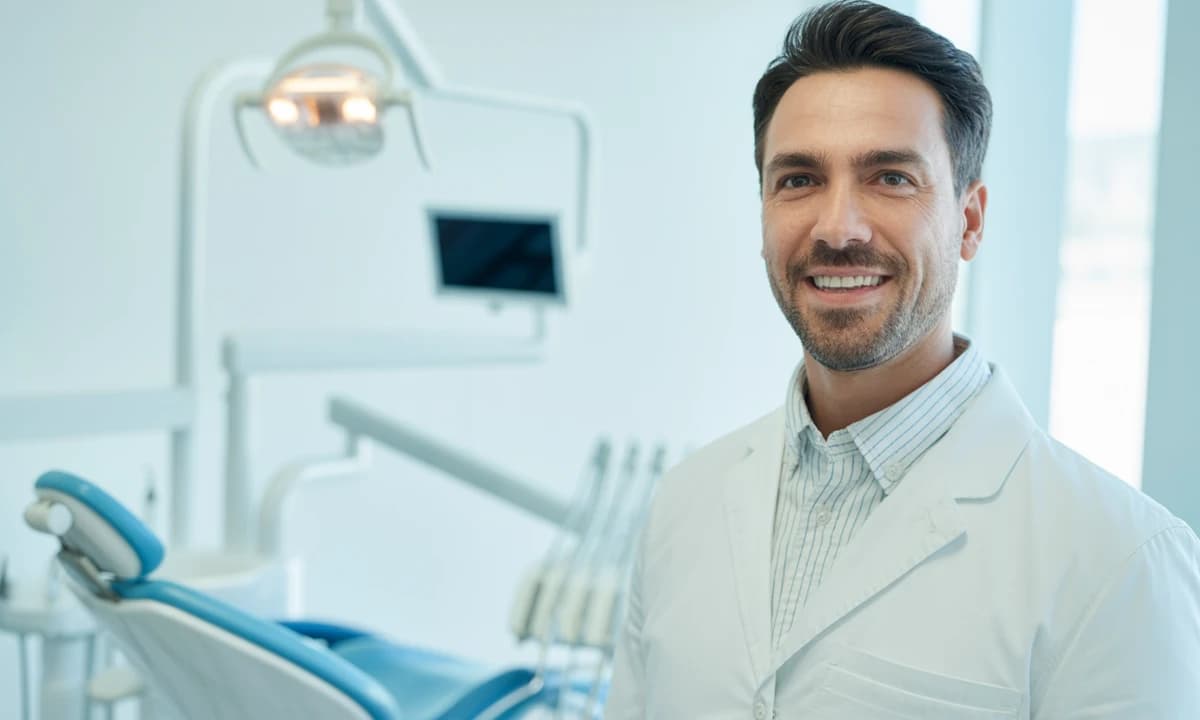

Teeth Whitening in Carlow
Professional teeth whitening in Carlow by Dr. Sina Choi. Safe, effective in-office and take-home whitening treatments for a brighter, more confident smile.

What Is Professional Teeth Whitening?
Professional teeth whitening is a safe, controlled cosmetic procedure that lightens the natural colour of your teeth without removing any tooth surface. It's one of the most popular treatments I carry out at my Carlow practice — and for good reason. A brighter smile can make an enormous difference to how you look and feel, and professional whitening delivers results that simply aren't achievable with shop-bought products.
The treatment uses a carefully formulated bleaching agent — usually hydrogen peroxide or carbamide peroxide — to break down stain molecules within the tooth enamel and the underlying dentine. The result is a noticeably whiter, more even smile. Depending on the method we choose together, results can be achieved in a single appointment or gradually over two to three weeks at home.
I want to be clear from the outset: professional whitening is about enhancing the natural brightness of your teeth. It won't change them to an unrealistic, blinding white. What it will do is remove years of accumulated staining and restore a fresh, clean appearance that suits your face and complexion.
Why Do Teeth Become Stained?
Understanding why teeth discolour helps you make informed decisions about whitening and long-term maintenance. There are two main types of tooth stain, and the distinction matters because each responds differently to treatment.
Extrinsic Stains
These are stains on the outer surface of the tooth — the enamel. They're caused by pigmented substances that accumulate over time:
- Tea and coffee — the single biggest culprits I see in my practice. Both contain tannins that bind to enamel and cause a yellowish-brown discolouration.
- Red wine — the combination of tannins, chromogens, and acidity makes red wine particularly effective at staining teeth.
- Smoking and tobacco use — tar and nicotine cause stubborn yellow and brown staining that deepens with continued use.
- Coloured foods — berries, tomato-based sauces, curry, and soy sauce can all contribute to surface staining over time.
- Poor oral hygiene — inadequate brushing allows plaque and tartar to build up, which attracts and holds stain.
Extrinsic stains respond very well to professional whitening. In many cases, a professional clean followed by whitening produces dramatic results.
Intrinsic Stains
These are stains within the tooth structure itself — inside the enamel or in the dentine beneath it. They're harder to treat and include:
- Ageing — as you get older, the outer enamel layer thins through natural wear, allowing the yellowish dentine underneath to show through more prominently. This is the most common cause of gradual yellowing.
- Tetracycline antibiotics — if taken during childhood when teeth are still developing, these can cause grey or brown banding within the tooth that's notoriously difficult to shift.
- Fluorosis — excessive fluoride intake during tooth development can cause white spots or brown discolouration.
- Dental trauma — a blow to a tooth can damage the internal pulp, causing it to darken from the inside out.
- Genetic factors — some people simply have naturally thicker, whiter enamel than others.
Professional whitening can improve many intrinsic stains, though the results depend on the type and severity. I'll always give you an honest assessment of what whitening can realistically achieve for your particular situation during your consultation.
Professional Whitening vs Over-the-Counter Products
I'm often asked whether shop-bought whitening strips, trays, or toothpastes can achieve the same results as professional treatment. The honest answer is no — and there are several important reasons why.
Strength of the Whitening Agent
Over-the-counter products in Ireland and the EU are legally limited to a maximum of 0.1% hydrogen peroxide. Professional products that I use contain significantly higher concentrations — up to 6% hydrogen peroxide for take-home kits and even higher for in-office treatments. This is the single biggest difference: professional products are simply more effective because they contain the concentrations actually needed to produce meaningful whitening.
Custom Fit
The take-home trays I provide are made from impressions of your teeth, so they fit precisely. This ensures the whitening gel stays in even contact with every tooth surface and doesn't leak onto your gums. Shop-bought trays are one-size-fits-all, which means uneven results and a higher risk of gum irritation from gel leaking out.
Professional Supervision
Before whitening, I examine your teeth and gums thoroughly. If you have untreated decay, gum disease, or cracks, whitening could cause problems — or simply won't work properly. I'll address any issues first, ensuring whitening is both safe and effective. With over-the-counter products, you're on your own.
Predictable, Even Results
Because I control the concentration, application time, and technique, professional whitening produces consistent, even results across all your teeth. Shop-bought products often produce patchy or uneven whitening, particularly if your teeth are crowded or if the tray doesn't fit well.
Whitening Toothpastes
A quick word on whitening toothpastes: most work by using mild abrasives to remove surface stains, not by actually bleaching the tooth. They can help maintain results after professional whitening, but they won't produce significant whitening on their own. Some contain very low concentrations of peroxide, but not enough to change the underlying colour of your teeth.
Whitening Options I Offer
I provide two main approaches to teeth whitening, and often a combination of both for the best results.
In-Office Whitening
This is the fastest route to a whiter smile. The entire treatment is carried out in my practice in a single appointment lasting approximately one hour. I apply a high-concentration whitening gel directly to your teeth after protecting your gums with a barrier, and in some cases use a special light to accelerate the process.
In-office whitening is ideal if you want immediate results — perhaps for a wedding, a job interview, or simply because you'd rather have it done in one visit. Most patients see their teeth lighten by several shades in that single session.
For a detailed walkthrough of the procedure, see my guide on in-office teeth whitening: what to expect.
Custom Take-Home Whitening Kits
This approach uses custom-made trays that fit your teeth precisely, along with a professional-strength whitening gel that you apply at home. I'll take impressions of your teeth, have your trays fabricated, and then show you exactly how to use them.
You'll typically wear the trays for 30 minutes to an hour each day (or overnight, depending on the gel concentration we choose) for two to three weeks. The results build gradually, and many patients actually prefer this approach because they can control the level of whitening and stop once they're happy with the shade.
Take-home whitening also has the advantage of being easy to top up in the future. You keep your custom trays, and when you want a refresh — perhaps once or twice a year — you simply purchase more gel from my practice.
Combination Approach
For many patients, I recommend starting with an in-office session for an immediate boost, then following up with the take-home kit to refine and extend the results. This combination typically achieves the most dramatic and longest-lasting whitening.
In-Office Whitening: What to Expect
The in-office procedure is straightforward and comfortable. Here's a brief overview:
- Assessment and shade recording — I check your teeth, note your current shade, and confirm you're a good candidate.
- Cleaning — a professional clean removes any surface plaque or tartar that could interfere with the whitening gel.
- Gum protection — I apply a protective barrier to your gums to shield them from the whitening agent.
- Gel application — the whitening gel is applied to the front surfaces of your teeth.
- Activation — the gel is left in place for a set period, sometimes with a special light to enhance the process. Multiple cycles may be used.
- Result — the gel is removed, and we compare your new shade to the starting point.
For the full step-by-step guide, see in-office teeth whitening: what to expect.
Take-Home Whitening: How It Works
The take-home process involves two short appointments and then treatment in the comfort of your own home:
First appointment: I take detailed impressions of your upper and lower teeth. These are used to fabricate custom whitening trays from thin, flexible plastic that fits your teeth precisely.
Second appointment (about a week later): I check the fit of your trays, provide your professional whitening gel, and demonstrate exactly how to apply it. I'll show you how much gel to use — a common mistake is using too much, which wastes gel and increases gum irritation.
At home: You place a small amount of gel into each tooth space in the tray and wear the trays as directed — typically 30 to 60 minutes per day, or overnight if we've chosen a lower-concentration gel. Most patients complete the course in two to three weeks, though you can stop sooner if you reach your desired shade.
I'll arrange a review appointment at the end of the course to check your results, assess your gum health, and take a final shade reading.
Who Is a Good Candidate?
Most adults with healthy teeth and gums are excellent candidates for professional whitening. However, there are some situations where whitening isn't appropriate or won't produce the results you're hoping for:
- Existing crowns, veneers, or fillings — whitening only works on natural tooth structure. Restorations won't change colour, so if you have visible restorations, whitening your natural teeth could create a mismatch. I'll discuss this with you and may suggest replacing visible restorations after whitening to achieve a uniform shade.
- Severe tooth sensitivity — if you already experience significant sensitivity, whitening may aggravate it. We can often manage this with desensitising treatment beforehand, but it's something I'll assess carefully.
- Gum disease or untreated decay — these need to be addressed before any whitening treatment. Applying whitening gel to decayed teeth can cause pain and further damage.
- Pregnancy and breastfeeding — I recommend postponing whitening during pregnancy and breastfeeding as a precaution.
- Children and teenagers — I don't whiten teeth in patients under 18, as the tooth pulp is still large and more susceptible to sensitivity.
- Certain types of intrinsic staining — tetracycline staining, for example, may respond partially to whitening but often requires prolonged treatment or alternative cosmetic approaches like veneers.
During your consultation, I'll examine your teeth, discuss your goals, and give you an honest opinion on whether whitening is the right option for you.
How White Will My Teeth Get?
This is one of the most common questions I'm asked, and I always believe in setting realistic expectations. The degree of whitening varies from person to person and depends on several factors:
- Your starting shade — teeth that are yellow or yellow-brown tend to respond best. Grey or blue-grey tones are more resistant to whitening.
- The type of staining — extrinsic stains (from food, drink, and smoking) respond more predictably than intrinsic stains.
- The method used — in-office whitening typically produces faster, more dramatic results, while take-home kits produce gradual improvement.
- Your natural tooth colour — there's a genetic baseline to your tooth colour. Whitening can lighten your teeth significantly, but it can't take them beyond their natural potential.
As a general guide, most patients achieve a lightening of two to eight shades — which is clearly visible and makes a real difference to your smile. I use a shade guide to record your starting colour and track the improvement, so you'll see the change objectively.
I'd rather under-promise and over-deliver than set unrealistic expectations. If your goals are beyond what whitening can achieve, I'll let you know and discuss alternatives.
Is Teeth Whitening Safe?
Yes — when carried out professionally. This is backed by decades of clinical research and millions of treatments worldwide. The key word is "professionally." The safety of teeth whitening depends on:
- Using the correct concentration of whitening agent for your specific situation
- Proper protection of the gums and soft tissues during treatment
- A thorough examination beforehand to ensure your teeth and gums are healthy enough for whitening
- Following instructions carefully with take-home kits — more is not better
The most common side effect is temporary tooth sensitivity, which occurs because the peroxide penetrates the enamel and reaches the dentine, where the nerve endings are closer. This sensitivity is almost always mild, resolves within a few days of completing treatment, and can be managed with desensitising toothpaste or gel.
Some patients experience mild gum irritation if the whitening gel contacts the soft tissues. With in-office treatment, I prevent this with a protective barrier. With take-home trays, the custom fit minimises leakage, and I'll show you how to wipe away any excess gel.
Professional whitening does not damage healthy enamel. The peroxide works by breaking down stain molecules — it doesn't dissolve or weaken the tooth surface. Studies consistently show that enamel hardness and structure are unaffected by properly administered professional whitening.
How Long Do Results Last?
Whitening results are not permanent, but with good habits they can last a long time. Most patients enjoy their results for one to three years before wanting a touch-up, though this varies significantly depending on lifestyle factors:
- Diet — regular consumption of tea, coffee, red wine, and highly pigmented foods will cause staining to return more quickly.
- Smoking — tobacco use is the fastest way to undo whitening results.
- Oral hygiene — good brushing and flossing habits slow the accumulation of new stains.
- Touch-up treatments — using your take-home trays for a few days once or twice a year can maintain your results indefinitely.
The underlying colour change from whitening is long-lasting. What happens over time is that new extrinsic stains accumulate on top of the whitened enamel. This is why periodic touch-ups are so effective — you're just removing the new surface staining, not starting from scratch.
Maintaining Your Results
Getting your teeth whitened is only half the story. What you do afterwards determines how long those results last. I've put together a detailed guide on how to keep your teeth white after whitening, covering everything from the critical first 48 hours to long-term maintenance strategies.
The key principles are straightforward:
- Be mindful of staining foods and drinks, especially in the first 48 hours when your teeth are most porous
- Use a whitening toothpaste for daily maintenance
- Keep up with professional cleans every six months
- Use your take-home trays for periodic touch-ups
- Don't smoke
Ready to Brighten Your Smile?
If you're considering teeth whitening, the first step is a consultation at my Carlow practice. I'll examine your teeth, discuss your goals, and recommend the approach that will give you the best results for your specific situation. There's no obligation — just an honest conversation about what's possible and what to expect.
A whiter smile is one of the simplest and most effective ways to refresh your appearance and boost your confidence. I'd love to help you achieve it.
Typical Duration
1 hour (in-office) or 2–3 weeks (take-home)
Related Guides
In-Office Teeth Whitening: What to Expect
A step-by-step guide to professional in-office teeth whitening — how it works, what happens during the appointment, and how to get the best results.
Read moreHow to Keep Your Teeth White After Whitening
Practical tips for maintaining your teeth whitening results — from diet and lifestyle changes to touch-up treatments and daily care.
Read moreHave Questions About Teeth Whitening in Carlow?
I'm happy to help you understand this treatment better. Feel free to send me a message.
Get in Touch