
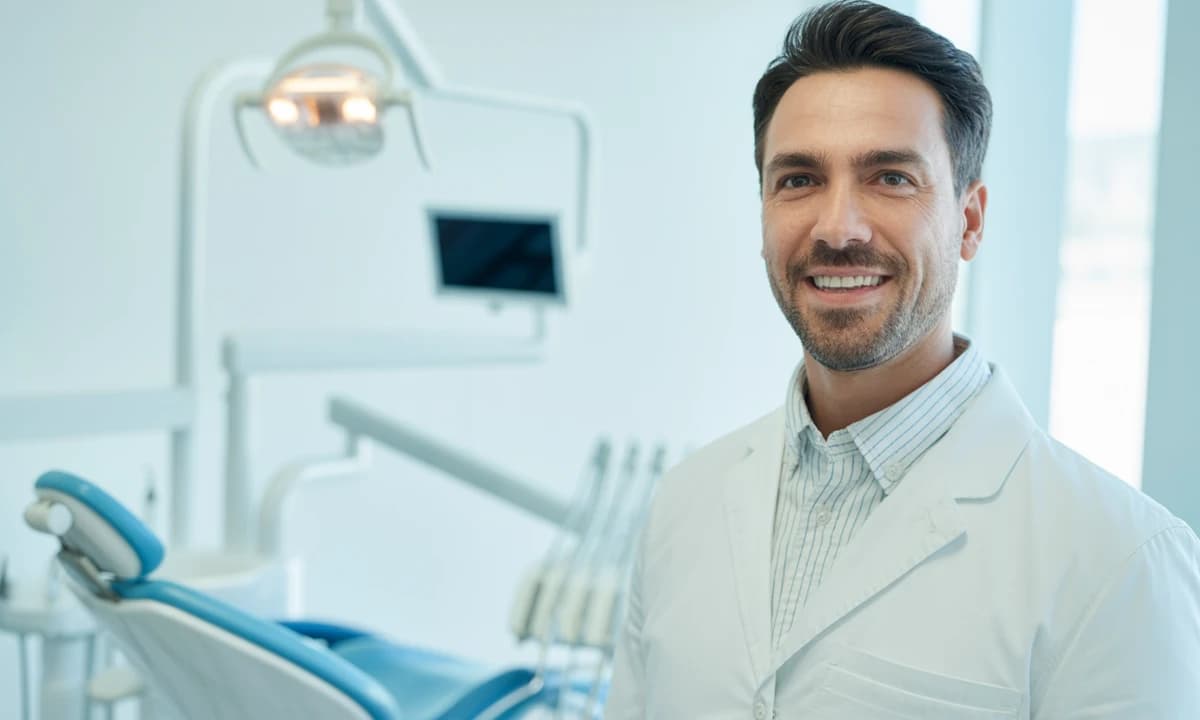

Emergency Dentist in Carlow
Dental emergency in Carlow? Dr. Sina Choi provides same-day emergency dental care for toothache, broken teeth, knocked-out teeth, infections, and dental trauma.

What Is a Dental Emergency?
A dental emergency is any situation involving your teeth, gums, or mouth that requires immediate attention — whether because of severe pain, uncontrolled bleeding, trauma, or the risk of losing a tooth. Not every dental problem is an emergency, but when one does arise, acting quickly can make the difference between saving and losing a tooth, or between a straightforward treatment and something far more complex.
If you're unsure whether what you're experiencing counts as a dental emergency, my advice is simple: ring my practice. I'd always rather hear from you and reassure you than have you wait at home while a problem gets worse. I keep same-day appointments available specifically for urgent cases, and my goal is to see you as quickly as possible when you're in pain or distress.
Common Dental Emergencies I Treat
Over the years, I've treated a wide range of dental emergencies in my Carlow practice. These are the situations I see most frequently:
Severe Toothache
A sudden, intense toothache — particularly one that throbs, wakes you at night, or makes it impossible to concentrate — usually signals an underlying problem such as deep decay, an abscess, or a cracked tooth. Toothache rarely resolves on its own, and the sooner I can diagnose the cause, the sooner I can relieve your pain and treat the problem. I've written a detailed guide on severe toothache: causes, relief, and when to seek help.
Broken or Chipped Teeth
A broken tooth can result from biting down on something hard, a fall, a sports injury, or even weakening from an old, large filling. The severity varies — from a small cosmetic chip to a major fracture exposing the nerve. If you've broken a tooth, try to save any fragments, avoid chewing on that side, and contact me as soon as possible. Depending on the extent of the damage, I can restore the tooth with bonding, a crown, or another appropriate treatment.
Knocked-Out Tooth
A completely knocked-out (avulsed) tooth is one of the most time-sensitive dental emergencies. If you act quickly and handle the tooth correctly, there's a genuine chance I can reimplant it successfully. The critical window is roughly 30 minutes, though reimplantation can still be attempted up to about an hour after the injury. I've put together a step-by-step guide on what to do when a tooth is knocked out — I'd encourage everyone to read it, because knowing what to do in those first few minutes is absolutely vital.
Lost Fillings or Crowns
A filling or crown that falls out can leave the underlying tooth exposed and sensitive. While not always as urgent as trauma or infection, it does need attention fairly quickly — the exposed tooth is vulnerable to further decay and damage. If your crown comes off intact, keep it safe and bring it with you. In many cases I can re-cement it. If a filling has been lost, I'll assess whether a new filling or a crown is the better option going forward.
Dental Abscess and Infection
A dental abscess is a collection of pus caused by bacterial infection, usually at the root tip of a tooth or in the gum. Abscesses are serious — they don't resolve without treatment, and the infection can spread to other parts of the body if left untreated. Signs include severe throbbing pain, swelling in the face or jaw, a bad taste in the mouth, fever, and sometimes a visible pimple on the gum that may ooze. If you suspect an abscess, contact me urgently. I'll drain the infection, prescribe antibiotics if needed, and address the underlying cause.
Facial Swelling
Swelling of the face, jaw, or neck related to a dental problem should be taken seriously. It often indicates a spreading infection and may need same-day treatment or, in severe cases, hospital attention. If swelling is affecting your ability to breathe or swallow, go directly to your nearest A&E department — that is a medical emergency.
Uncontrolled Bleeding
Bleeding from the mouth that doesn't stop after 15–20 minutes of firm pressure with clean gauze needs professional attention. This can occur after an extraction, trauma, or sometimes spontaneously from the gums. I'll identify the source and take appropriate steps to control the bleeding.
What to Do in a Dental Emergency
Knowing a few basic first-aid steps can make a real difference in the outcome of a dental emergency. Here's my advice for the most common situations:
For a Severe Toothache
- Take over-the-counter pain relief (ibuprofen is generally most effective for dental pain — take it with food).
- Rinse gently with warm salt water (half a teaspoon of salt in a glass of warm water).
- Apply a cold compress to the outside of your cheek if there's swelling.
- Do not place aspirin directly against the gum — this is a common home remedy that actually causes chemical burns to the tissue.
- Ring my practice for a same-day appointment.
For a Broken or Chipped Tooth
- Rinse your mouth with warm water to clean the area.
- Save any broken fragments — store them in milk or saliva.
- If there's bleeding, apply gentle pressure with clean gauze.
- Use a cold compress on the outside of your cheek to reduce swelling.
- Cover any sharp edges with dental wax or sugar-free chewing gum to protect your tongue and cheeks.
- Contact me as soon as possible.
For a Knocked-Out Tooth
- Find the tooth and pick it up by the crown (the white part you normally see) — never touch the root.
- If the tooth is dirty, rinse it very briefly under cold running water for no more than 10 seconds. Do not scrub it or use soap.
- If possible, gently push the tooth back into the socket and hold it in place by biting on a clean cloth.
- If you can't reimplant it yourself, store the tooth in milk, saliva, or a tooth-preservation kit if you have one. Do not store it in water.
- Get to my practice (or the nearest dentist) within 30 minutes if at all possible.
For the full guide, see knocked-out tooth: what to do and how I can help.
For a Lost Filling or Crown
- If a crown has come off, try to slip it back over the tooth temporarily (do not use household glue — a tiny dab of denture adhesive on the inside of the crown is acceptable as a temporary measure).
- If a filling is lost, you can cover the cavity with temporary dental cement from a pharmacy, or a small piece of sugar-free chewing gum.
- Avoid chewing on that side.
- Ring my practice to arrange an appointment within the next day or two.
For an Abscess or Facial Swelling
- This is urgent — contact me immediately or, if outside surgery hours, attend A&E if the swelling is severe.
- Rinse with warm salt water several times a day to help draw the infection toward the surface.
- Take ibuprofen and/or paracetamol for pain and to reduce inflammation.
- Do not try to lance or squeeze the abscess yourself.
How I Handle Emergency Cases
When you ring my practice with an emergency, here's what you can expect:
Triage by phone. I or a member of my team will ask you a few quick questions to assess the urgency — what happened, how much pain you're in, whether there's bleeding or swelling. This helps me prepare for your visit and prioritise appropriately.
Same-day appointment. I keep time available each day specifically for emergencies. In most cases, I can see you the same day you ring. If the situation is truly urgent — a knocked-out tooth, uncontrolled bleeding, severe swelling — I'll do everything I can to see you as quickly as possible.
Pain relief first. My first priority when you arrive is to get you comfortable. If you're in severe pain, I'll administer local anaesthetic to numb the area before I do anything else. I know how distressing dental pain can be, and I won't leave you sitting in agony while I take a lengthy history.
Assessment and diagnosis. Once you're comfortable, I'll examine the area thoroughly, take X-rays if needed, and explain exactly what's going on. I believe in being straightforward with my patients — I'll tell you what I find, what your options are, and what I recommend.
Immediate treatment. Wherever possible, I'll treat the problem there and then. That might mean draining an abscess, stabilising a broken tooth, reimplanting a knocked-out tooth, replacing a lost filling, or starting root canal treatment. Some emergency cases require follow-up appointments to complete definitive treatment, but my aim is always to resolve the acute problem — pain, infection, instability — on the day.
Knocked-Out Tooth: Critical First Steps
I want to emphasise this because it's so time-sensitive: a knocked-out permanent tooth can often be successfully reimplanted if you act within the first 30 minutes. Every minute that passes reduces the chance of success because the cells on the root surface begin to die once the tooth is out of its socket.
The most important things are:
- Handle the tooth by the crown only — the root surface has delicate cells (periodontal ligament cells) that are essential for reattachment. Touching, scrubbing, or letting the root dry out will damage them.
- Keep the tooth moist — ideally in milk, your own saliva (spit into a container and place the tooth in it), or a proprietary tooth-saving solution. Milk is the best readily available option because its pH and osmolality are compatible with the root cells.
- Get to a dentist immediately — ring ahead so I can prepare for reimplantation the moment you arrive.
Read my full guide: knocked-out tooth: what to do and how I can help.
Dental Abscess and Infections: Why They're Serious
A dental abscess might seem like a localised problem, but infections in the mouth can become dangerous surprisingly quickly. The reason is anatomy — the teeth, jaw, and surrounding tissues are close to vital structures including the airway, the brain, and major blood vessels. An untreated dental infection can lead to:
- Cellulitis — a spreading soft-tissue infection that can cause severe facial swelling
- Ludwig's angina — a serious infection of the floor of the mouth that can compromise the airway
- Sepsis — if bacteria enter the bloodstream, the body's response can become life-threatening
- Brain abscess — extremely rare, but documented cases exist of dental infections spreading to the brain
I don't mention these to frighten you — the vast majority of dental abscesses are treated straightforwardly and resolve completely. But I do want you to understand why I take dental infections seriously, and why I'd rather see you urgently than have you try to manage an abscess with painkillers and hope it goes away. It won't.
Signs that a dental infection may be spreading and requires urgent attention include:
- Increasing facial swelling, particularly if it's affecting the eye or extending down the neck
- Difficulty opening your mouth, swallowing, or breathing
- Fever, feeling generally unwell, or a rapid heartbeat
- The swelling feels firm or hard rather than soft
If you notice any of these, contact me immediately or go to A&E.
When to Go to A&E vs. the Dentist
Most dental emergencies are best handled by a dentist rather than a hospital emergency department. A&E doctors can prescribe antibiotics and painkillers, but they generally don't have the specialist equipment or training to perform definitive dental treatment — they can stabilise you, but they'll refer you to a dentist for follow-up.
Come to me (your dentist) for:
- Severe toothache
- Broken, chipped, or cracked teeth
- Knocked-out teeth (but go to A&E first if there are other injuries — head injury, facial fractures, loss of consciousness)
- Lost fillings or crowns
- Dental abscess without severe systemic symptoms
- Bleeding after an extraction that won't stop with pressure
Go to A&E for:
- Facial swelling that is affecting your breathing or swallowing
- Significant facial trauma — broken jaw, multiple broken teeth from an accident, deep lacerations
- Head injury associated with dental trauma
- Uncontrollable bleeding from the mouth
- Signs of spreading infection with fever, difficulty breathing, or feeling very unwell
- Any situation where you feel your life may be at risk
When in doubt, ring my practice first. I can advise you over the phone whether you need A&E or whether I can handle the situation myself.
Preventing Dental Emergencies
While not all dental emergencies are preventable — accidents happen — there's a great deal you can do to reduce your risk:
Wear a Mouthguard for Sport
If you play contact sports such as rugby, GAA, hurling, hockey, or boxing, a custom-fitted mouthguard is one of the best investments you can make for your teeth. Over-the-counter boil-and-bite mouthguards offer some protection, but a professionally made mouthguard fits better, stays in place, and provides significantly better protection. I can make one for you — it's quick and straightforward.
Avoid Using Your Teeth as Tools
Don't open bottles, tear packaging, or bite your nails with your teeth. This puts them under forces they weren't designed for and can cause fractures.
Don't Chew Hard Objects
Ice cubes, hard sweets, popcorn kernels, and pen caps are common culprits for broken teeth. If you have large fillings or crowns, be particularly cautious.
Address Grinding and Clenching
If you grind your teeth at night (bruxism), the repeated excessive force weakens teeth over time and makes them much more prone to fracture. A night guard can protect your teeth while you sleep — ask me about this at your next check-up.
Keep Up with Regular Check-Ups
Many emergencies — particularly those caused by decay or infection — are preventable with regular dental visits. I can spot problems early, when they're small and easy to treat, before they develop into painful emergencies. A small filling today prevents a dental abscess and root canal treatment next year.
Maintain Good Oral Hygiene
Brushing twice daily with fluoride toothpaste and flossing once a day keeps decay and gum disease at bay. These are the two most common underlying causes of dental emergencies, and they're largely preventable with consistent home care.
How to Contact Me in an Emergency
If you're experiencing a dental emergency, ring my practice as soon as possible. Let the person who answers know that it's urgent, and we'll arrange to see you at the earliest available time — in most cases, the same day.
If your emergency occurs outside normal surgery hours, my voicemail message will provide guidance on what to do, including how to reach me for genuine emergencies. For life-threatening situations — difficulty breathing, severe uncontrolled bleeding, or signs of serious systemic infection — always ring 999 or 112 and go directly to your nearest A&E.
I understand that dental emergencies are stressful and often frightening. My aim is to see you quickly, get you out of pain, and deal with the problem calmly and effectively. You're in safe hands.
Learn More
For detailed guidance on specific dental emergencies, see my in-depth articles:
- Knocked-Out Tooth: What to Do and How I Can Help — the critical first steps that can save your tooth
- Severe Toothache: Causes, Relief, and When to Seek Help — understanding and managing dental pain
Typical Duration
Same-day appointments available
Related Guides
Knocked-Out Tooth: What to Do and How I Can Help
A knocked-out tooth can often be saved if you act quickly. Learn the critical steps to take and how emergency dental treatment can reimplant your tooth.
Read moreSevere Toothache: Causes, Relief, and When to Seek Help
Understand what causes a severe toothache, how to manage pain at home, and when you need to see an emergency dentist in Carlow.
Read moreHave Questions About Emergency Dentist in Carlow?
I'm happy to help you understand this treatment better. Feel free to send me a message.
Get in Touch