
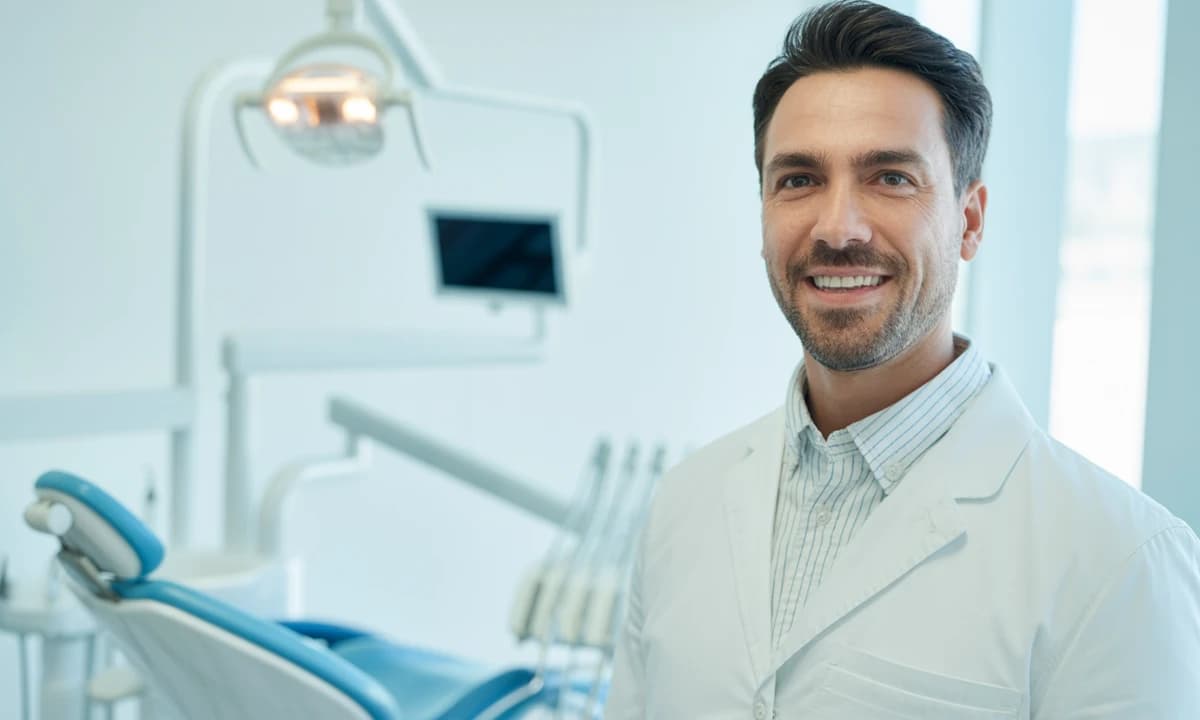

Dental Implants in Carlow
Dental implants in Carlow by Dr. Sina Choi. Permanent, natural-looking tooth replacement — single implants, All-on-4, and implant-supported dentures.

What Are Dental Implants?
A dental implant is a small titanium post that is surgically placed into the jawbone to serve as an artificial tooth root. Once the implant has integrated with the bone — a natural process called osseointegration — it provides a rock-solid foundation for a replacement tooth that looks, feels, and functions just like the real thing.
Each implant restoration has three components:
- The implant itself — a titanium screw that sits within the jawbone, taking on the role of the natural tooth root
- The abutment — a connector piece that attaches to the top of the implant and emerges through the gum
- The crown — a custom-made porcelain or ceramic tooth that fits onto the abutment and is the only part visible in your mouth
What makes implants remarkable is how closely they mimic natural teeth. The titanium post stimulates the jawbone just as a natural root does, preventing the bone loss that inevitably follows tooth extraction. The crown is colour-matched and shaped to blend seamlessly with your surrounding teeth. Most people won't be able to tell the difference between an implant and a natural tooth — and neither will you, once you've adjusted to it.
In my Carlow practice, I've seen dental implants transform patients' confidence and quality of life. Whether you're missing a single tooth or need to replace an entire arch, implants offer a permanent, reliable solution that I'm proud to provide.
Why Choose Implants Over Other Options?
When a tooth is lost, there are several ways to fill the gap — but not all replacements are created equal. Here's how implants compare to the alternatives.
Implants vs. Bridges
A traditional dental bridge requires me to file down the two healthy teeth on either side of the gap to serve as anchors for the replacement tooth. This means sacrificing sound tooth structure that may never have needed treatment. An implant, by contrast, stands independently in the bone — your neighbouring teeth are left completely untouched.
Bridges also don't prevent bone loss beneath the missing tooth. Over time, the jawbone in that area shrinks because it's no longer being stimulated by a root. Implants maintain the bone, preserving your facial structure and preventing the sunken appearance that can develop after tooth loss.
Implants vs. Dentures
Removable dentures rest on the gum ridge and are held in place by suction, adhesive, or clasps. While they restore appearance and basic function, they can slip during eating or speaking, may cause sore spots, and require daily removal for cleaning. Many denture wearers also find that their dentures become looser over time as the underlying bone resorbs.
Implants eliminate all of these concerns. They're fixed in place — you brush them just like natural teeth, eat whatever you like, and never worry about them shifting or falling out. For patients who already wear dentures and are frustrated by the limitations, implant-supported dentures offer a life-changing upgrade.
Key Benefits of Dental Implants
- Permanent and stable — once placed and restored, implants are a long-term solution that won't shift, slip, or need adhesive
- Preserve jawbone — the titanium root stimulates the bone, preventing the deterioration that follows tooth loss
- Protect adjacent teeth — no need to grind down neighbouring teeth, as required for a bridge
- Natural appearance and feel — custom-made crowns are virtually indistinguishable from your own teeth
- Eat with confidence — bite and chew normally, including foods that denture wearers struggle with
- Easy to maintain — care for them just as you would natural teeth, with regular brushing and flossing
- High success rate — dental implants have a success rate of over 95% and can last a lifetime with proper care
Types of Implant Treatment I Offer
Every patient's situation is different, and I tailor the implant approach to your specific needs. Here are the main types of implant treatment I provide.
Single Tooth Implant
If you're missing one tooth — whether from decay, trauma, or extraction — a single implant and crown is the gold standard replacement. One titanium post is placed in the bone, and a single custom crown is attached. It's a straightforward, self-contained solution that fills the gap without affecting any other teeth.
Multiple Tooth Implants
When you're missing two or more teeth in a row, I don't necessarily need to place one implant for every missing tooth. Instead, two or three implants can support a fixed bridge spanning the gap. This is more efficient, more cost-effective, and produces an excellent result — a row of natural-looking teeth anchored firmly in the bone.
All-on-4 Implants
The All-on-4 technique is a remarkable solution for patients who have lost all or most of their teeth in one arch. Four strategically placed implants — two straight at the front and two angled at the back — support a full arch of fixed replacement teeth. The angled posterior implants take advantage of the denser bone at the front of the jaw, which often means that bone grafting can be avoided even when there has been significant bone loss.
All-on-4 treatment can sometimes provide you with a fixed set of temporary teeth on the same day as surgery, so you leave the practice with a functioning smile. The final, permanent prosthesis is fitted once healing is complete.
Implant-Retained Dentures
If you currently wear full dentures and find them uncomfortable, loose, or limiting, implant-retained dentures offer a transformative improvement. Two to four implants are placed in the jaw, and your denture clips securely onto them using special attachments. The denture is still removable for cleaning, but when it's in place, it's firmly anchored — no more slipping, no more adhesive, and a dramatically improved ability to eat and speak.
This option is often more affordable than a full fixed bridge on implants while still providing a massive improvement in stability and comfort over conventional dentures.
Am I a Candidate for Dental Implants?
Most adults with missing teeth are suitable candidates for implants, but there are several factors I assess during your consultation.
Bone Density and Volume
Implants need a sufficient quantity and quality of jawbone to anchor securely. After tooth loss, the bone in the affected area gradually resorbs. If you've been missing a tooth for some time, there may not be enough bone remaining. However, this doesn't necessarily rule out implants — bone grafting and sinus lift procedures can rebuild the bone to the level needed. I'll assess your bone with a detailed CT scan during the planning stage.
General Health
Certain medical conditions can affect implant healing. Uncontrolled diabetes, autoimmune disorders, and conditions that suppress the immune system may increase the risk of implant failure. Medications such as bisphosphonates (used for osteoporosis) also require careful consideration. I'll review your full medical history and work with your doctor if needed to ensure implants are safe for you.
Smoking
I have to be straightforward about this: smoking significantly reduces the success rate of dental implants. It impairs blood flow to the gums and bone, slowing healing and increasing the risk of infection and implant failure. I strongly advise patients to stop smoking before implant surgery and throughout the healing period. If you're a smoker and considering implants, I'm happy to discuss this with you honestly and help you weigh up the options.
Age
There's no upper age limit for dental implants — I've successfully placed implants in patients well into their 70s and 80s. The key factor is health, not age. However, implants are generally not placed in patients whose jaws are still growing, so they're typically not suitable for teenagers. Young adults from around age 18 onwards can usually be considered.
Gum Health
Active gum disease (periodontitis) must be treated and brought under control before implant placement. Placing an implant into an environment with active gum infection would compromise the result. I'll ensure your gums are healthy before we proceed, and I'll set you up with a maintenance plan to keep them that way.
The Implant Procedure: An Overview
The implant journey takes several months from start to finish, but the time investment is well worth the result. Here's a summary of the key stages.
1. Initial Consultation and Assessment
I'll examine your mouth, review your dental and medical history, and take X-rays. If implants look like a good option, I'll arrange a detailed CT scan of your jaw, which gives me a three-dimensional view of your bone and allows me to plan the exact positioning of each implant.
2. Treatment Planning
Using the CT scan data, I plan the surgery digitally — determining the ideal implant position, angle, and size for the best outcome. If bone grafting or a sinus lift is needed, this is factored into the timeline. I'll explain the full treatment plan to you, including the number of appointments, the timeline, and what to expect at each stage.
3. Implant Placement Surgery
The implant is placed under local anaesthetic. I make a small incision in the gum, prepare a precise channel in the bone using a series of calibrated drills, and insert the titanium implant. The gum is then closed over the implant with a few stitches. The procedure typically takes 30–60 minutes per implant. Most patients are surprised by how straightforward and comfortable it is.
4. Healing and Osseointegration
This is the crucial phase where the implant bonds with your jawbone. It typically takes 3–6 months, during which you go about your daily life normally. I'll fit a temporary tooth or denture so you're never left with a visible gap. During this time, it's essential to follow my aftercare instructions to give the implant the best chance of successful integration.
5. Abutment and Final Restoration
Once I've confirmed that the implant is firmly integrated, I attach the abutment and take impressions for your final crown, bridge, or denture. The permanent restoration is then fabricated by a skilled dental technician, custom-made to match your natural teeth in colour, shape, and size. At the final appointment, I fit the restoration and check your bite carefully.
For a detailed step-by-step walkthrough, see my guide on the dental implant procedure.
Osseointegration: How Implants Bond with Bone
Osseointegration is the biological process that makes dental implants possible. When a titanium implant is placed in the jawbone, the bone cells gradually grow onto and around the implant surface, locking it firmly in place. This process typically takes 3–6 months, though the timeline can vary depending on bone quality, implant location, and individual healing response.
Titanium is uniquely biocompatible — the body accepts it without triggering a foreign-body reaction. Over time, the implant becomes essentially fused with the bone, creating a bond that's strong enough to withstand the forces of biting and chewing for decades.
During the osseointegration period, it's important not to place excessive force on the implant. I'll advise you on dietary precautions and give you clear guidance on protecting the implant while it heals. Once integration is confirmed — I'll verify this clinically and sometimes with X-rays — we can move forward with the final restoration.
How Long Do Dental Implants Last?
One of the most common questions I'm asked is how long implants last. The honest answer is that a well-placed, well-maintained dental implant can last a lifetime. Studies with 20- and 30-year follow-up data show implant survival rates above 90%, and many of the earliest implants placed in the 1960s and 1970s are still functioning today.
The implant itself — the titanium post in the bone — is the most durable component and rarely fails once it has successfully integrated. The crown or prosthesis on top may need replacing after 10–15 years due to normal wear, just as a crown on a natural tooth would. This is a straightforward process that doesn't affect the implant underneath.
The factors that most influence implant longevity are:
- Oral hygiene — keeping the gum tissue around the implant clean and healthy is essential to prevent peri-implantitis, an inflammatory condition that can lead to bone loss around the implant
- Regular check-ups — I'll monitor your implants at every appointment, checking gum health, bone levels, and the condition of the restoration
- Avoiding smoking — smoking remains the single biggest risk factor for long-term implant complications
- Managing grinding — if you clench or grind your teeth, a night guard will protect both your implants and your natural teeth
Bone Grafting and Sinus Lifts
Sometimes a patient is an excellent candidate for implants in every way except one — there isn't quite enough bone to support the implant securely. This is common when a tooth has been missing for a long time, when there's been significant gum disease, or in the upper jaw where the sinus cavity naturally sits close to the tooth roots.
Bone Grafting
A bone graft adds volume to the jaw where it's been lost. Graft material — which may be synthetic, derived from a donor source, or occasionally taken from another area of your own jaw — is placed in the deficient area and allowed to integrate with your natural bone over several months. Once the graft has matured, the site is ready for implant placement.
In some cases, a minor graft can be performed at the same time as implant placement, avoiding the need for a separate procedure.
Sinus Lift
A sinus lift is a specific type of bone graft used in the upper jaw. When the sinus floor sits too close to where the implant needs to go, I gently lift the sinus membrane upward and place graft material beneath it to create sufficient bone depth. This is a well-established procedure with a high success rate, and it opens up implant treatment for many patients who would otherwise not have enough bone in the upper jaw.
I'll explain clearly during your consultation whether any additional procedures are needed and how they affect the overall treatment timeline.
Learn More
I've put together detailed guides on the specific aspects of implant treatment:
- The dental implant procedure: step by step — a detailed walkthrough of what happens at each stage, from consultation to final restoration
- Dental implant aftercare — essential guidance on caring for your implants, from the first 24 hours after surgery to long-term maintenance
If you're considering dental implants, or if you've been told in the past that you weren't a candidate, I'd encourage you to book a consultation. Implant dentistry has advanced considerably in recent years, and I may be able to offer solutions that weren't previously available. I'll assess your situation thoroughly, explain your options honestly, and help you make the decision that's right for you.
Typical Duration
3–6 months total treatment time
Related Guides
The Dental Implant Procedure: Step by Step
A detailed walkthrough of the dental implant process — from initial consultation and planning through surgery, healing, and final crown placement.
Read moreDental Implant Aftercare: How to Care for Your Implants
Essential aftercare advice for dental implants — from the first 24 hours after surgery to long-term maintenance for lasting results.
Read moreHave Questions About Dental Implants in Carlow?
I'm happy to help you understand this treatment better. Feel free to send me a message.
Get in Touch